Wednesday, July 21, 2010

Why your websites don’t work for you – Part 2

Last week, we took a look at increased bounce rate of visitors on websites. This week, I would like to turn the spotlight on another common issue faced by web designers.

Decreased Attention Span from Users:
Maybe your website did manage to sustain a user for a long duration yet there is no marked improvement in user-involvement on the site. Well, this is yet another common problem faced by webmasters. A visitor may casually browse through the site, but may not really participate in any activity. For example, a product site that has plenty of offers on display will not really benefit the site owner if the user does not click on the products/offers to explore it further.


In the above image, the website does not really capture user attention for any section. The headings are not catchy and the overall look of the website is text heavy. At one glimpse, it is not even successful in communicating what the website is all about. This is surprising considering it is about a web designing company! If user attention is not held out here, how will prospective clients even trust the company? A question best answered by them! The ‘Join the Mailing List’ section is hardly seen, so how will visitors participate in any activity on the site?


The above image is about a rental homes website. Yet, I somehow could not figure this out until I read the text. The elements do no justice to the topic. There are no offers or details mentioned to interest visitors. A poor design with no scope for any activity by visitors leads to further disinterest and disengagement. Apart from the design, there is also a need to attract user attention towards major highlights and offers or deals. This is when visitors will be most interested in a website.

At this point, you might wonder how this issue can be solved. How do we increase attention span of users? Continue reading for the solution.

Increasing Attention Span of Users

Interactivity…yes! Interactivity is the answer to all your questions.

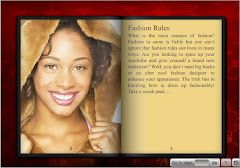
Interactivity helps to grab attention of users. Someone casually visiting your website may stay longer if your offer is highlighted through a unique interactivity. An interactive banner can be placed in one section of the website to complement a balanced web design. The idea is to hold the attention of the user. Once the first step is achieved, the next steps follow. For example, a section of a website can be highlighted with an interactive Panning Cards model which helps to keep attention of a user in one area, delivering the message at the same time. The design should invite a person to explore the site.

I hope this has helped you to start thinking on what interactivity is all about and how to make the best use of it. My next blog would help you to get even more insights into interactivity and few more samples to different types of interactivity. I shall also tackle the 3rd and most common problem for webmasters. Till then, keep designing!


Tuesday, July 13, 2010

Why your websites don’t work for you – Part 1

It’s been a while since I actually penned down my thoughts, or should I say, typed voraciously into my keyboard! Well, all the while I have been hammered by questions from people who have the best website design yet don’t really have too many takers in terms of visitors. So, coming back to my favorite topic, web design, I came across this golden question voiced by webmasters - ‘Why your websites don’t work for you’. This series is planned in 4 parts. Here, we shall take a look at situation 1 out of 3 main problem areas with a detailed solution in my 4th blog of this series.

High Bounce Rate:
Why do visitors leave the website immediately from the page they land upon? There can be many reasons for the same. A cluttered website with too many elements such as graphics and animations can force a visitor to jump to another site. Navigational issue is another reason wherein visitors may jump to another site in the absence of a clear navigational structure. For example: an informative website will have users seeking authentic content. However, if the design and navigation does not direct the user appropriately, the obvious action would be to visit some other website.


In the above image, there is a heavy usage of color and graphics. As a user, it does not make one explore the site further. Imagine navigating through this website! Are you really motivated to stay on such a site? This is one of the main reasons why there is a high bounce rate of users.


This example (above image) is a sight to drive users….away instantly! Even if the website has interesting content, I wonder how many would read text out here. There is a heavy amount of text, images are sparse, the fonts are uneven in size and the overall look is messy. The rest, you can guess easily!

Overcoming High Bounce Rate
Engaging visitors on websites is an effective solution to reduce bounce rate. This does not mean you need to load websites with heavy graphics and animations! The effective use of interactivity helps to keep users on the page itself. Instead of using a web page like a complete creative canvas and ‘spilling’ your creativity on it, interactivity can be used to highlight areas of interest. A product portfolio can be showcased through interactivity such as 3D Flip Book. This will not only engage users on the page, it will also ensure your message reaches the target group effectively.

In our next blog post of the series, let us take a look at the second problem. I shall also dedicate one entire blog to present solutions of each problem with examples. (Make sure you don’t miss that!) Looking forward to hear from all budding web designers to know the kind of problems faced while designing a website.


Monday, May 10, 2010

How to Think Creative…Constantly!


Jack was on his usual walk this morning. Everything seemed to have a dull streak for him. The same old roads, the same people and even the same job! Jack was unable to motivate neither his team members nor himself. What he lacked was the knack of looking at the same thing with an optimistic approach!

We are all ‘Jacks’ at some point in our lives. We need to be creative to think creatively. Jack could have looked at the bright, beautiful skies which he failed to notice. He could have been inspired by the beautiful flowers on the sidewalks. The soft, lilting sound of the birds would have given him all the positive energy for the day. Yet, Jack suffered from depression.

Often artists/web designers/designers often come up to me and ask, “What should we do to be creative?” There is no fixed formula for the same. The trick lies in unleashing your creativity. We need to connect with nature and things around us. There is a need to be observant. Find your interests and pursue them. Only then can creativity reflect in one’s work!


A web designer once said, “I know software such as Photoshop or Flash, yet I am unable to create websites that are exclusive in design.” For this, I feel that there are many tools on the market to bring about that magical touch to websites. To use them to the fullest requires creativity in the mind. Ideas are the soul of any design and tools are useful to give shape to those ideas.

To think creatively, you need to free your mind…and your soul!


Monday, April 12, 2010

Why Site Maps Need a Revamp!

“Never solve a problem from its original perspective.” - Charles Thompson

That’s what I have been sharing with people around me. There are innumerable ways to look at the same situation. What seems as a humongous task may seem easy after you look at it from a different angle. Somehow, a problem may seem as a challenge only if you change your perspective!

The same thought process can be applied even in terms of design. An interesting thing about anything related to design is that one can have as many views as required for the same topic. Another unique point is that every individual has a different method of approach. This reveals many interesting options. Which is why, I come back to one point I have been pondering about, why can’t this be applied to web design as well?

Take for example site maps on websites. I have often observed how these are repetitive in terms of design. I agree ease of use is important, but surely there can be a better way of presentation! It should make a user want to browse the site.
On this note, I thought about creating something on my own to explain it better. Here’s my creation below. A little bit of Photoshop with website interactivity…that’s the key to visually enriching site maps!


(This interactivity is created with Raptivity Web Expert’s Site Booster Pack.)


In this example, I have attempted to design using food as a subject for the sample. What I have tried here is to bring attention to the important sections of the website. Many more sections can be added depending upon the design. This will not only make the section visually-appealing, it will also serve in making users browse the website.

I hope this example has given plenty of new ideas for your web design. Once your inspirations are ready, do share it with me too! It would help other readers as well as me, to find out about the many approaches towards web design.

Monday, April 5, 2010

Adding Spice to Websites!

There’s a lot that goes behind designing a website. It requires more than just designing and programming skills! In fact, the creation of a website should be done with ample amount of consideration and care, which involves thinking from the users’ point of view. One needs to bring together different ingredients for a creatively designed website that communicates the message effectively! In fact, the process is the same one goes through while whipping up a very sumptuous dish! What goes behind such a dish is the careful use of ingredients measured in the right proportion. Only then, can one enjoy a well-cooked meal!

Some of the main things required to be presented in a website are the company/service information; products and offers, contact information, etc. This is required to connect with users globally.

Through the Internet, users have easy access to information. They can access information such as their favorite brands, company, product, service, personality and lots more! The website then is the main medium of communication between a company and the user.

A creative web site requires a good balance between design and content. When words are supported with an attractive display of visuals, it engages the users of the website. Many successful websites are able to get visitors involved in one way or another. By making the website more engaging to visitors, you are more likely to get a high number of repeated visitors.
Even before a user reads the content of the website, it is the design and layout of the website which attracts the user. As the famous saying goes, “First impressions are the last impressions”, this holds true even in terms of websites. A content-rich website can drive away a user if it is not displayed properly.

Hence, a web site needs to first look attractive and engage users so that the whole experience of surfing through the site turns out to be an interesting one. Attractive panels, banners, color schemes, buttons, graphics etc., are some of the ways used to turn a website into a visually attractive place! Although a lot of effort is channelized in this direction, many web sites do not meet the expectations of the end users. Even if they attract users, it hardly generates interest to hold a users’ attention span for a long duration. This is when we come to the vital question, how do we add that right element of spice to a website?

Whip Up the Right Recipe!
Recipe No. 1: Interactivity is the Main Ingredient
Interactivity is about keeping the user on the page. Earlier, website designers used Flash to make a website appear attractive and interactive. However, adding Flash interactivity to a website would take days to program and customize, as per the website requirement. On the other hand, rapid interactivity, a new paradigm, allows web designers to add exciting interactivities to websites within a matter of minutes through simple customization.

Why interactivity? Interesting and interactive pages encourages users to stay on the page for a longer duration. This also gives the website owner enough time to convey a message across effectively.


In the above image, important action items have been grouped together. This interactive feature holds user attention in one area and makes a user perform an action. An attractive and interactive display ensures users spend time on the website exploring it further.


As seen in the above image, a site map which usually does not form as an attention-grabbing element has been used to capture attention. The site map highlights important sections of the website which makes it easier for a user to navigate. The visually pleasing elements stand testimony that site maps need not always be designed in a plain manner.


A product/service website usually declares special offers. For example, a special discount for only first hundred users on its website. These kind of special offers can be effectively shown using a peel banner as shown in the above image, which generates curiosity amongst users to explore what’s underneath the hood.


Creating such interactions does not require one to spend hours on programming using rapid interactivity! For many other interactivity ideas read the following blog post.
Using such rapid interaction creation technology, one can easily customize Flash interactivities through a template library. It not only brings about a fresh change in the way content is presented, it saves web designers those grueling hours spent on programming!

Recipe No. 2: Social Interaction is the Dessert!
A website with a fantastic design and layout can be useful only when it connects with its users effectively. The more people that connect and interact on the website, the better it is for you! Take for example, a product website. The moment such a website includes elements for social interaction; it will create a more loyal base of users. The inclusion of activities such as FAQs, Debates, Polls, Presentation Sharing, etc, will ensure users interact with each other. Besides, users of a particular product may even recommend the product to others. A user may even come up with valuable suggestions to be included in the product. The suggestions from users are very important as they are the users of your product or service. They can be the best one to suggest improvements or new features in your offerings. After all, co-creation is what every company would aim for from its users.

Isn’t it time you switch and try out these ingredients to spice up your websites? I am sure you will have a successful website with all these elements!